So far in this book, we have had the question of Marxism versus fundamentalists; rephrased, we have been discussing if religion is good for the people or for those in power. In the last chapter, it was a question of whether shamans created mystical gods to control and victimize the people around them or if they genuinely believed that they had control over the supernatural world and used that power to help those around them. In this chapter, we have reached the next step in human cultural development, the chiefdoms. These groups are larger than the bands of kin that spread throughout the world, and are more complicated and hierarchal, but not as large, complicated or hierarchal as future ancient city-states.
As groups became more complicated, so too did religion. Religion stepped in to reinforce a moral code and social system to keep order. In Evolution of God, Robert Wright uses the example of Polynesian islands whose concept of manu and tapa used to keep control. Manu is good; tapa was bad. Chiefs and priests would invoke tapa to punish those who were exhibiting anti-social behaviors, either morally (such as murder or theft) or not following religious rituals. Similarly, chiefs were considered conduits of the positive religious energy of manu, which protected you from religious wrath and made your life more successful. They rewarded those who lived their lives positively and religiously. Thus began moral dimensions within society- do good, receive good fortune; do bad, be sacrificed to appease the gods.
In many ways, concepts such as manu and tapa served ancient chiefdoms as science. People would find correlations between two variables-such as the appearance of stars in the night sky and weather, or perhaps the behavior of the parents and the health of their child- and surmise an explanation, using their religion. In the first case, they would interpret their gods' wishes to predict the weather; in the second case, they would reason that the parent's tapa made the child ill. While their methodology was crude and their explanations often wrong, our modern science is dated back to ancient times.
The Marxists believe that chiefs and priests selfishly used manu and tapa as a carrot to control those in society and, while they may be correct in some instances, ancient chiefdoms tended to be subject to cultural Darwinism. Chiefs that abused their power or rule poorly tended to fall victim to wars or coups, and their societies tended to be trampled by socially stronger societies. Just as anti-social people tended to be eliminated through sacrifice or by outcasting them, so stronger and more harmonious societies developed and grew, and more selfish chiefs were eliminated in coups. And the most successful societies eventually grew into larger ancient states, such as Babylon, forming the next chain in human development.
Tuesday, June 29, 2010


Monday, June 21, 2010
EoG Chapter 2: The Shaman
Between ancient hunter-gatherer superstitions and more organized village chiefdoms, there lay the shaman. The term "shaman" is an umbrella term that covers any person (man or woman, perhaps child) that claims to have some control or insight into a culture's supernatural belief system. Cynics (Marxists) and optimists (functionalists) debate over whether the shaman truly believed that they had control or insight into their gods and goddesses or if they were a sort of primitive scam artist. There is merit for both arguments.
For the Marxists side, there is the idea that shamans didn't do the work that they did to serve the greater good, but rather for personal gain. Services that they provided were paid for rather than given for free or the common good. Using their so-called access to the supernatural world, shamans leveraged political powers for themselves, bringing themselves into further notoriety. The anthropologist Paul Radin explains that the shaman techniques were "designed to do two things: to keep the contact with the supernatural exclusively in the hands of the [shaman], and to manipulate and exploit the sense of fear of the ordinary man." By developing this religion that revolved around service for the shaman, the shamans were servicing themselves at the expense of culture.
The fundamentalists argue that the shamans weren't necessarily in it for themselves. They point to the strenuous hardships that many shamans suffered to get in touch with the spiritual world- many cultures required them to abstain from food or sex for days or months, some even to pierce their penises. If a shaman was found to be a fraud, he was ostracized from the community, probably to certain death. In certain cultures, shamans guaranteed their work- beads or blankets that they received for their services were given back if their incantations failed to heal the sick or prevent storms. According to the fundamentalists, the shamans gave social cohesion and created "social vitality."
Who was right? Were the shamans fundamentally good, creating social unity and serving society? Or as the Marxists believe, did they control society and exploit innocent people? As Robert Wright puts it, why not both? Both viewpoints come into play for cultural evolution. Shamans paved the way for the next step in human development- chiefdoms.
For the Marxists side, there is the idea that shamans didn't do the work that they did to serve the greater good, but rather for personal gain. Services that they provided were paid for rather than given for free or the common good. Using their so-called access to the supernatural world, shamans leveraged political powers for themselves, bringing themselves into further notoriety. The anthropologist Paul Radin explains that the shaman techniques were "designed to do two things: to keep the contact with the supernatural exclusively in the hands of the [shaman], and to manipulate and exploit the sense of fear of the ordinary man." By developing this religion that revolved around service for the shaman, the shamans were servicing themselves at the expense of culture.
The fundamentalists argue that the shamans weren't necessarily in it for themselves. They point to the strenuous hardships that many shamans suffered to get in touch with the spiritual world- many cultures required them to abstain from food or sex for days or months, some even to pierce their penises. If a shaman was found to be a fraud, he was ostracized from the community, probably to certain death. In certain cultures, shamans guaranteed their work- beads or blankets that they received for their services were given back if their incantations failed to heal the sick or prevent storms. According to the fundamentalists, the shamans gave social cohesion and created "social vitality."
Who was right? Were the shamans fundamentally good, creating social unity and serving society? Or as the Marxists believe, did they control society and exploit innocent people? As Robert Wright puts it, why not both? Both viewpoints come into play for cultural evolution. Shamans paved the way for the next step in human development- chiefdoms.
Wednesday, June 9, 2010
EoG Chapter 1: The Primordial Faith
Religion started out several millenia ago as a way for early hunter-gatherer societies to explain the world around them. A few questions they wanted answered- what were dreams? What happened when you died? Why do bad things happen to good people? Good things to bad people? What can I do to make good things happen to me?
Religion first began when man developed the concept of a soul, that dreams were your soul wandering the earth while you slept, and death was your soul leaving your body once your earthly form was finished. From there it's an easy leap to putting souls in everything- trees, animals, even inanimate objects like rocks and the wind. (Can you paint with all the colors of the wind?) From there, early societies developed the idea that there were gods that were in charge of all of these different objects- the god of trees, the god of the sun and wind, etc. Religion started as a way of explaining the world around them and grew organically from that.
Hunter-gatherers developed five different types of gods:
Religion first began when man developed the concept of a soul, that dreams were your soul wandering the earth while you slept, and death was your soul leaving your body once your earthly form was finished. From there it's an easy leap to putting souls in everything- trees, animals, even inanimate objects like rocks and the wind. (Can you paint with all the colors of the wind?) From there, early societies developed the idea that there were gods that were in charge of all of these different objects- the god of trees, the god of the sun and wind, etc. Religion started as a way of explaining the world around them and grew organically from that.
Hunter-gatherers developed five different types of gods:
- Elemental spirits: Objects that we consider inanimate, such as rocks, have intelligence, personality and a soul.
- Puppeteers: Parts of nature, such as the wind, were being controlled by gods distinct from themselves.
- Organic spirits: Objects that we consider alive, such as animals or trees, have souls themselves and can control elements of nature.
- Ancestral spirits: Deceased members of society stuck around, able to help or hinder the living.
- The high god: This isn't a god that is in charge of other gods, but rather one that is somehow superior to the other gods for some reason or another.
Finally, a quote: "Religious doctrines can't survive if they don't appeal to the psychology of the people whose brains harbor them," meaning religion will only work if it appeals to the hunter-gatherers. If a religion or religious idea doesn't make sense to a group of people, they will reject it and search for a new explanation of why nature works the way that it does. This raises the idea of cultural evolutionism, or cultural Darwinism- weaker ideas are discarded in favor of stronger, more logical ideas. This can come in the form of rituals, when one ritual doesn't work and must be discarded to find another way, or simple theory.
My thoughts about my personal religion:
- If ritual was originally created to make good things happen to good people and prevent bad things, then the rituals that I went through when I was younger- communion, baptism- were there to make good things happen to me?
- My original religion- Episcopalianism, or Diet Catholic- doesn't make any sense to me. Does this mean that it doesn't reflect my own ideas about the way the world works? Is this why science is more successful, and why Catholicism and Christianity is losing members?
Evolution of God
For my Questioning Religion class, I'm writing a thesis paper on the different manifestations of God within western religions, namely Judaism, Christianity and Islam. It sounded smart to me, anyway, and it was better than debating the existence of evil all summer (or going outside.)
To this end, I'm reading Evolution of God by philosopher Robert Wright, about the development of religion in western society. It's pretty convenient for me that this book exists; it's like my work has been done for me!
To help me figure out this book, I'm going to be summarizing and analyzing the book chapter by chapter. If you guys want, you can read along with me or comment or criticize to help me think of concepts I hadn't thought of yet and help me further my thinking! It'll be fun.
To this end, I'm reading Evolution of God by philosopher Robert Wright, about the development of religion in western society. It's pretty convenient for me that this book exists; it's like my work has been done for me!
To help me figure out this book, I'm going to be summarizing and analyzing the book chapter by chapter. If you guys want, you can read along with me or comment or criticize to help me think of concepts I hadn't thought of yet and help me further my thinking! It'll be fun.
Friday, April 30, 2010
Photoshop
Body image is a pretty common topic on feminist blogs- consider Broadsheet's recent article on recent cover girl Nancy Pelosi or here which talks about photo retouching and the recent trend against it. Photo-retouching is pretty common practice in magazines, making beautiful women even more impossibly beautiful and giving us some impossibly high standards of beauty to boot.
So I googled some images:
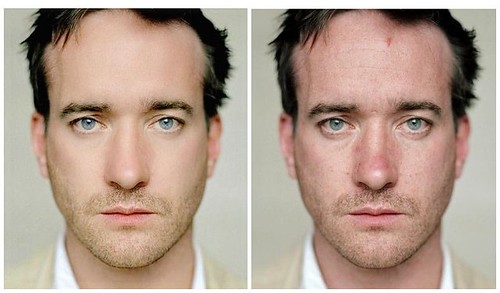

and

And I got to thinking. When I see images in magazines of impossibly beautiful images, like the picture of Britney Spears or Mariah Carey, it does make me feel bad about myself. As the blog Feministe points out, these images create an idea that beauty is something that can be achieved rather than something you're born with naturally, that if you work hard enough and pay enough money than you're beautiful. These magazines create two-fold ideas: 1. that if you're not beautiful, obviously you're not working hard enough and 2. you're never, ever going to be beautiful enough.
Looking at these photos, though, I feel better about myself. Namely, I know that the ethereal beauty are reachable with a few hours on Photoshop and, conversely, that even the most beautiful women are as ugly as me.
So I googled some images:
and
And I got to thinking. When I see images in magazines of impossibly beautiful images, like the picture of Britney Spears or Mariah Carey, it does make me feel bad about myself. As the blog Feministe points out, these images create an idea that beauty is something that can be achieved rather than something you're born with naturally, that if you work hard enough and pay enough money than you're beautiful. These magazines create two-fold ideas: 1. that if you're not beautiful, obviously you're not working hard enough and 2. you're never, ever going to be beautiful enough.
Looking at these photos, though, I feel better about myself. Namely, I know that the ethereal beauty are reachable with a few hours on Photoshop and, conversely, that even the most beautiful women are as ugly as me.
Wednesday, March 31, 2010
Date Night
So Tina Fey is one of the hottest stars on the planet right now. She has a hit show (you may have heard of it, 30 Rock? You know, the critically acclaimed show and a huge success with audiences?), has written and starred in several popular movies (Mean Girls, Baby Mama) and is considered one of the funniest and most successful women in Hollywood today. Plus she has this new movie coming out, Date Night.
The movie also stars Steve Carell, Mark Wahlberg, James Franco and Mila Kunis, although watching the trailer you'd swear only Carell and Franco are in the movie. All five are established comedic actors on their own: Fey as listed above, Carell's roles in Forty Year Old Virgin and Anchorman established his career, Wahlberg was hilarious as an existential firefighter in I <3 Huckabees, James Franco redefined his career in the stoner-buddy-comedy Pineapple Express, and Mila Kunis has been a comedy darling since her role in That 70's Show. But again, watching the trailer above, you'd think only Carell and Franco were the ones with comedic chops.
I have enough confidence in both Fey and Kunis as comedic actresses, and that they both have the smarts to pick strong roles that give them great, funny, memorable lines. But it's the trailer that doesn't show that- the trailer betrays a lack of confidence in its female stars. Fey is used to ogle the man-candy that is Wahlberg shirtless, and Kunis sets up a joke for Franco. That's it. What- does that mean that Kunis and Fey don't get any good lines in the entire movie? Did Kunis and Fey settle for the stereotypical wife role, playing second banana to Carell and Franco?
I lean more towards the filmmakers and the editor of the trailer not trusting the appeal of Fey (specifically) and Kunis as comedians, or even women. Again, as I said above, Kunis and Fey are hilarious. Everyone knows it. I mean, Carell and Franco are doing extremely well for themselves, but Kunis and Fey are as well! Do they think that funny women are going to scare off their target audience? What target audience would be scared of funny women, twelve year old boys?
Personally, this exclusion turns me off from this movie. The marketing team is underselling its actors and that doesn't bode well for the movie as a whole.
The movie also stars Steve Carell, Mark Wahlberg, James Franco and Mila Kunis, although watching the trailer you'd swear only Carell and Franco are in the movie. All five are established comedic actors on their own: Fey as listed above, Carell's roles in Forty Year Old Virgin and Anchorman established his career, Wahlberg was hilarious as an existential firefighter in I <3 Huckabees, James Franco redefined his career in the stoner-buddy-comedy Pineapple Express, and Mila Kunis has been a comedy darling since her role in That 70's Show. But again, watching the trailer above, you'd think only Carell and Franco were the ones with comedic chops.
I have enough confidence in both Fey and Kunis as comedic actresses, and that they both have the smarts to pick strong roles that give them great, funny, memorable lines. But it's the trailer that doesn't show that- the trailer betrays a lack of confidence in its female stars. Fey is used to ogle the man-candy that is Wahlberg shirtless, and Kunis sets up a joke for Franco. That's it. What- does that mean that Kunis and Fey don't get any good lines in the entire movie? Did Kunis and Fey settle for the stereotypical wife role, playing second banana to Carell and Franco?
I lean more towards the filmmakers and the editor of the trailer not trusting the appeal of Fey (specifically) and Kunis as comedians, or even women. Again, as I said above, Kunis and Fey are hilarious. Everyone knows it. I mean, Carell and Franco are doing extremely well for themselves, but Kunis and Fey are as well! Do they think that funny women are going to scare off their target audience? What target audience would be scared of funny women, twelve year old boys?
Personally, this exclusion turns me off from this movie. The marketing team is underselling its actors and that doesn't bode well for the movie as a whole.
Tuesday, March 2, 2010
New Scott Pilgrim song revealed via Facebook!
For those of you who don't read any sort of graphic novels, read movie news or have just never heard of Bryan Lee O'Malley's Scott Pilgrim series, here's a quick summary- Scott Pilgrim is a bass-playing Vancouver-ite in his early twenties who meets the girl of his dreams. Besides all the baggage that comes with starting any sort of relationship, there's one major one: seven evil ex-boyfriends that Scott must battle before he can even start dating her. It's currently one of the most praised graphic novel series currently being released and its sixth and final book is one of the most anticipated book releases this year (by me, anyway.)
In addition, Edgar Wright, director of Shaun of the Dead and Hot Fuzz is directing the film adaptation. It stars Michael Cera (the guy Hollywood has weirdly decided represents early-twenty somethings, apparently), Kieran Culkin, and Up in the Air's Anna Kendrick. Wright has been releasing a picture a day from the set for the past year or so on his blog, driving up anticipation for the film.
Another nugget was announced today- Toronto band Metric has been collaborating with Wright to create some of the music for the soundtrack. A significant plot point of "Pilgrim" revolves around competing art-rock band called "Clash at Demonheads." Metric collaborated with Nigel Goodrich, who also produced for U2, Beck, basically tons of great bands, to work on 'Black Sheep,' encapsulating the sound of "Clash at Demonheads." You can hear it here, on Facebook (you have to become a fan to hear the song, oh no) and it's a pretty cool song, origins aside. It helps that they seem like a pretty cool band anyway, and the song originated before the movie, which only makes the song cooler.
The movie is being released August 13, 2010 and the final graphic novel still doesn't have a release date, making Edgar Wright and company still the only people who know how the series ends. Why do they tease me so?
Side note: Anna Kendrick was also in Twilight? For the love of God, no!
In addition, Edgar Wright, director of Shaun of the Dead and Hot Fuzz is directing the film adaptation. It stars Michael Cera (the guy Hollywood has weirdly decided represents early-twenty somethings, apparently), Kieran Culkin, and Up in the Air's Anna Kendrick. Wright has been releasing a picture a day from the set for the past year or so on his blog, driving up anticipation for the film.
Another nugget was announced today- Toronto band Metric has been collaborating with Wright to create some of the music for the soundtrack. A significant plot point of "Pilgrim" revolves around competing art-rock band called "Clash at Demonheads." Metric collaborated with Nigel Goodrich, who also produced for U2, Beck, basically tons of great bands, to work on 'Black Sheep,' encapsulating the sound of "Clash at Demonheads." You can hear it here, on Facebook (you have to become a fan to hear the song, oh no) and it's a pretty cool song, origins aside. It helps that they seem like a pretty cool band anyway, and the song originated before the movie, which only makes the song cooler.
The movie is being released August 13, 2010 and the final graphic novel still doesn't have a release date, making Edgar Wright and company still the only people who know how the series ends. Why do they tease me so?
Side note: Anna Kendrick was also in Twilight? For the love of God, no!
Subscribe to:
Posts (Atom)